
Personal Training
How to Choose the Best Personal Trainer in Maroubra
A local buyer's guide: what to look for, what to ask, and the red flags to avoid.
Personal Training
By Brad Ellison ·
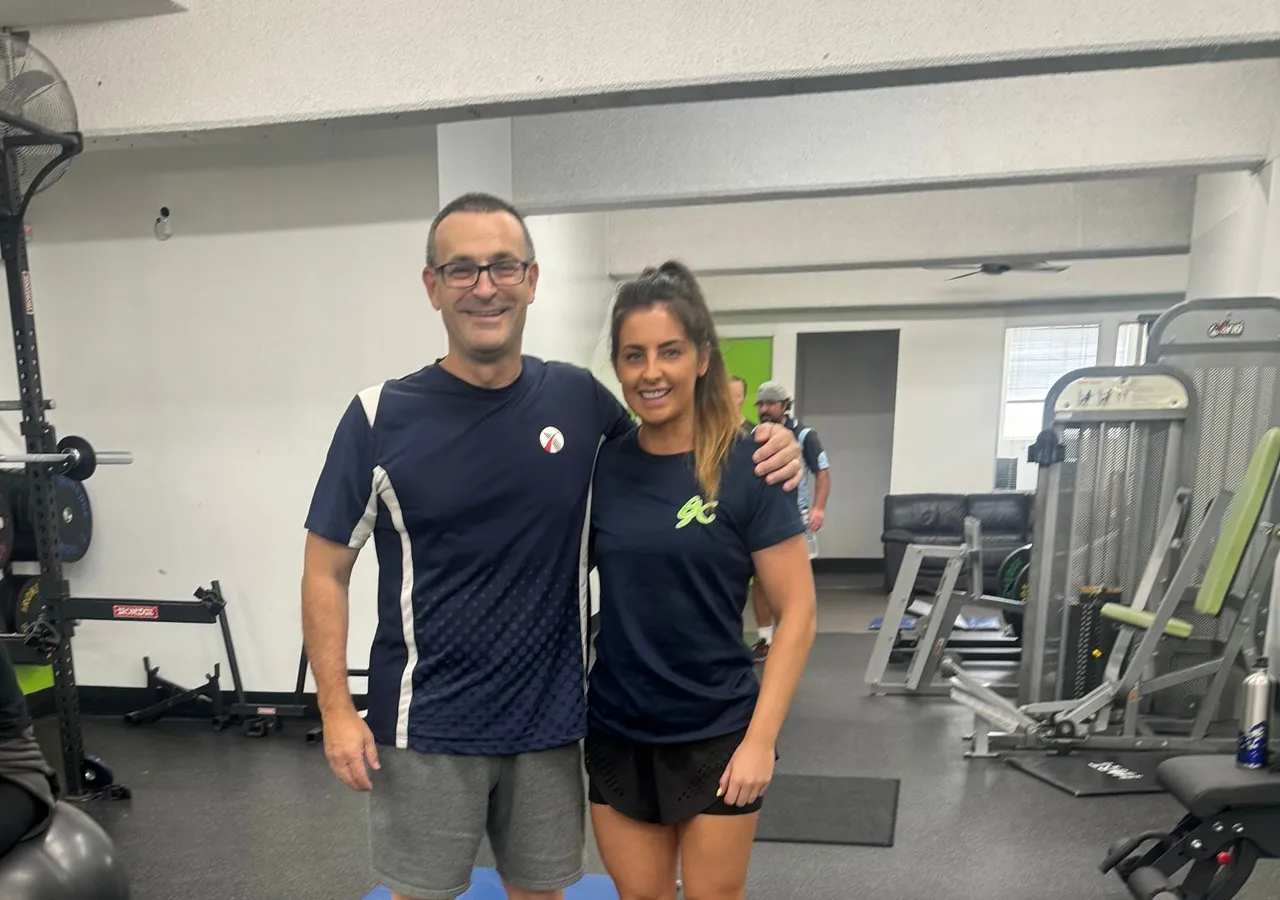
If you live in Malabar, the question that matters is not which personal trainer is best in Sydney. It is which coach you will still be turning up to in week six. Distance, session times and whether somebody is actually watching you train decide that far more reliably than qualifications listed on a website. We coach out of 319 Malabar Road, which is the road most of Malabar drives up, and since 2011 the pattern has not changed: the people who get a result picked somewhere they already pass.
In my experience the strongest single predictor of whether someone is still training in week six is how far they have to travel. Fifteen minutes each way feels fine in week one and quietly becomes the reason you skip a Tuesday in week four. A bad day only has to beat a short trip, not a long one.
So before you compare trainers, draw a small circle around home, work and the school run, then only look inside it. For most of Malabar that circle covers Maroubra, Matraville, Chifley and South Coogee. It rarely stretches to the city, whatever your January self believes. A good coach fifteen kilometres away loses to an average coach five minutes away every time, because the average coach is the one you actually see.
You are not paying for the room, the equipment or the hour. Those are cheap, and any 24 hour gym will sell them to you. You are paying for four things:
Remove any one of those and you have bought company rather than coaching. Victoria's Better Health Channel puts the first of them plainly: before starting any resistance training, make sure you have an assessment and a program written for your specific needs, and get your technique right, because resistance training can be dangerous if it is not (Better Health Channel, Resistance training: preventing injury). The same page says to see your doctor first if you are over 40, carrying extra weight, managing a pre-existing condition, or coming back after a long time away. That describes most people who walk into our studio, and it is worth ten minutes of your time.
If a trainer gets defensive about any of those five, you have your answer without needing the answer. We cover the wider version of this in our guide to choosing a personal trainer in Maroubra.
Week one should be more conversation and assessment than sweat. Training history, injuries, what your week actually looks like, a baseline body-composition measurement, and a first session pitched so you can walk the next day. Anyone who buries a beginner on day one is coaching their own ego. There is a fuller walkthrough in what to expect in your first PT session.
Week two is where technique gets built. Expect to be corrected often and to lift lighter than you want to. Week three is where load starts moving, because a program that does not get harder does not keep working. Week four is the review, and it should be against a number rather than a feeling. If nobody sits you down around the four-week mark and shows you what changed, nobody is tracking it.
What you should not expect in four weeks is a transformation. A sensible rate of loss is about half a kilo to one kilo a week, which lands most people somewhere around 2 to 4kg in a month, usually with a little more in the first fortnight as water shifts. Strength normally moves faster than the scale, and that is a good sign, not a problem.
One-on-one buys you the most attention per session, and it is the right starting point if you are new, coming back from an injury, or nervous about a gym floor. The limitation is cost per week, which caps how often most people can train.
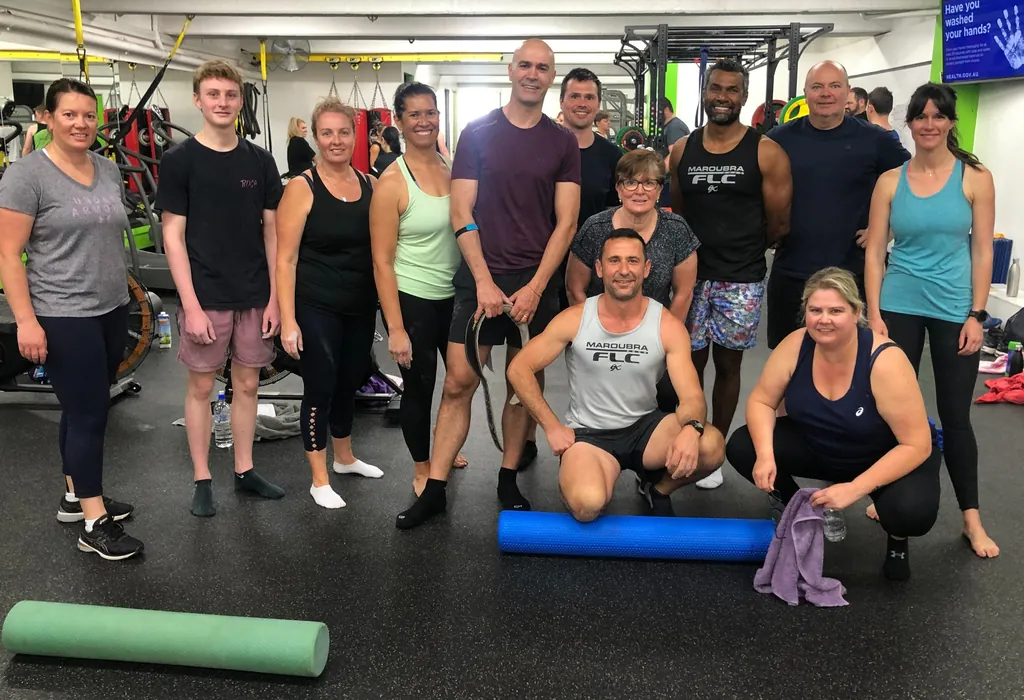
Coached small group buys you most of the technique correction at a lower weekly cost, plus a group that notices when you stop showing up. That accountability is not a soft benefit. It is frequently the whole reason someone finishes a block. Our Max8 sessions are capped at eight for that reason, because past about eight people a coach stops coaching and starts counting.
Most of our members end up doing both: a one-on-one session for the hard technical work and the program review, group sessions for frequency. If a studio only sells you one of the two, ask why.
Personal training in the Eastern Suburbs is not cheap, and I would be sceptical of the cheapest quote you get. A coach who is undercutting everyone is either new, or carrying a client load that makes real programming impossible. What matters more than the weekly number is what sits inside it. Before you compare two prices, check whether each one includes:
Two quotes that look twenty dollars apart are usually hundreds apart once you line those up. Our own on-ramp is the 28-Day Kickstart at $449, which covers the one-on-one sessions, the body-composition scan and the nutrition plan, and it carries a guarantee: lose 2kg in 28 days or you get your money back. I can put a guarantee on it because we measure. That is the whole argument for measuring.
Australia's physical activity guidelines ask adults for 2.5 to 5 hours of moderate activity a week, or 1.25 to 2.5 hours of vigorous activity, plus muscle-strengthening activity on at least 2 days (Department of Health and Aged Care). Almost nobody struggles with the first half. The strength half is the part that gets skipped, and it is the part that protects muscle while you are eating less.
Two coached sessions a week plus walking covers it, and Malabar makes the walking easy. The headland, Long Bay and the coast walk are at the end of the street, and daylight saving runs through to early April, so an after-dinner walk is realistic for most of the year. Getting from 4,000 steps a day to 9,000 changes your weekly energy output more than adding a fourth gym session, and it costs you no recovery.
One practical note on timing. NSW Term 4 finishes on Thursday 17 December and the summer holidays run through to Wednesday 27 January (NSW Department of Education), so the weeks before school finishes are the last stretch of normal routine in the year. In my experience people who start in that window arrive in January already moving, and people who wait for January spend the first fortnight shopping for a trainer instead of training.
We are at 319 Malabar Road, Maroubra, a short drive north of Malabar on the road you already use. Brad founded the studio here in 2011 and we have coached thousands of local adults since, most of them between 30 and 55, most of them wanting to lose 5kg or more, and plenty of them nervous about walking into a gym at all.
In practice that means coaches rather than a swipe card, an InBody 570 scan every 4 to 6 weeks so we are tracking fat and muscle rather than a number on the scales, one-on-one personal training alongside Max8 coached sessions capped at eight, practical nutrition coaching, gym access between sessions, and a recovery suite with an infrared sauna and an ice bath. Members come from Malabar, Maroubra, Matraville, Chifley, South Coogee, Pagewood, Kingsford and Randwick, and almost all of them are inside a ten minute drive.
Every new member starts with a consultation before any money changes hands. We go through your history, what your week actually allows, and what you want to be different in twelve weeks. Sometimes that conversation ends with us saying we are not the right fit, and I would much rather do that than take twelve weeks of someone's money. If you want to see what we have done for people already, the member results are worth ten minutes, and our weight loss coaching in Sydney's east page covers the programs in detail.
Questions
Personal Training
A local buyer's guide: what to look for, what to ask, and the red flags to avoid.

Personal Training
Exactly what happens in your first session, so you can walk in knowing what to expect.
Training
Boot camps are cheap, hard and social, and for plenty of people that is enough. Here is what they do well, what they cannot do, and how to tell a good one from a bad one.
Personal Training
A straight answer on whether personal training is worth the cost, who it suits, and how to judge the return.
This article is general information for healthy adults and is not medical, dietetic or physiotherapy advice. Speak with your GP or a qualified health professional before starting a new exercise, nutrition or recovery program, particularly if you have an existing injury or medical condition.
Your next step
A short conversation about your goals, your history and what a realistic plan looks like.