Training
Strength Training After 40: Why It Matters More, Not Less
Why resistance training becomes the highest-value habit after 40, and how to start safely.
Training
By Brad Ellison ·
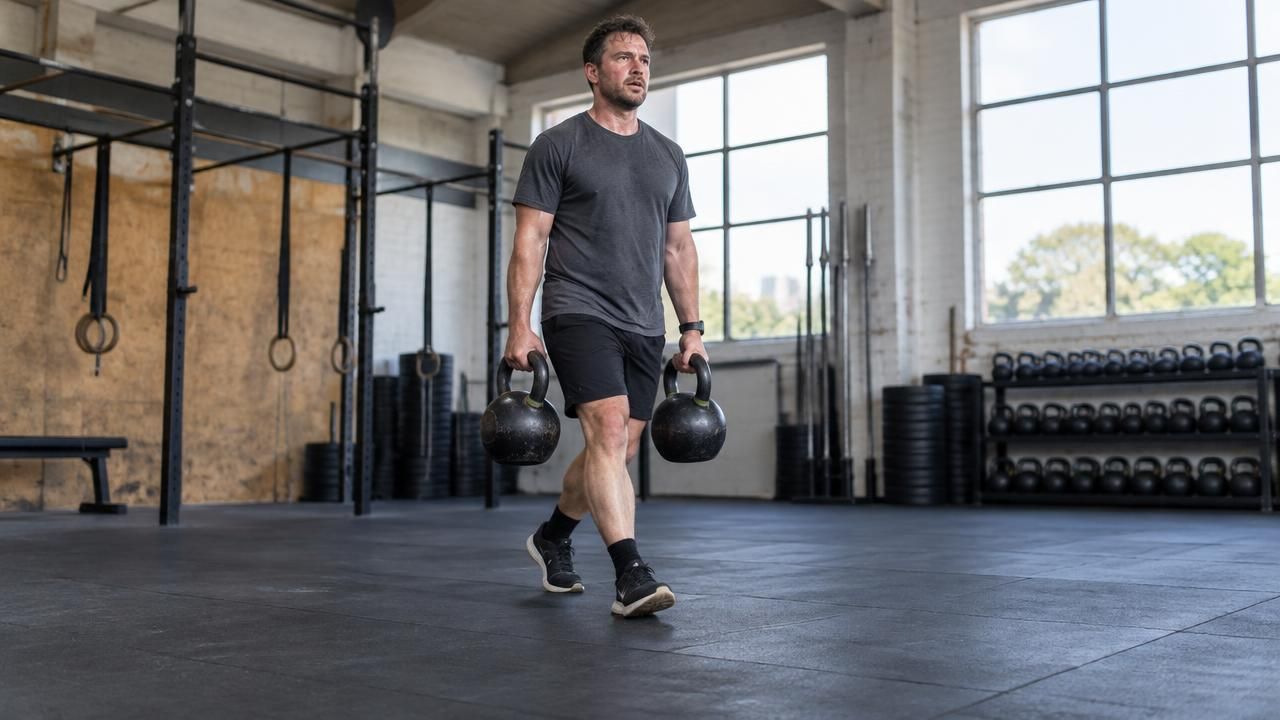
Functional training means training the movement patterns your body actually uses (squatting, hinging, pushing, pulling, carrying and rotating) so you are stronger and more capable in everyday life, not just in the gym. It is not about wobbling on a balance ball; it is about building strength that transfers to lifting kids, carrying shopping, climbing stairs and staying resilient as you age.
Functional simply means the training carries over to real life. The most functional exercises are usually the fundamentals: a well-executed squat, deadlift, press, row and loaded carry. These build strength across whole movement patterns and the muscles that stabilise your joints, which is what protects you from everyday strains and injuries.
It is not a gimmick, and harder-to-balance is not automatically better. Standing on an unstable surface often reduces how much you can safely load, which limits the strength you build. Well-coached, progressively loaded fundamental movements deliver far more real-world carryover than circus-style exercises.
Want training that shows up in your everyday life? A free consultation is a good place to start.
Questions
Training
Why resistance training becomes the highest-value habit after 40, and how to start safely.

Personal Training
A straight answer on whether personal training is worth the cost, who it suits, and how to judge the return.
This article is general information for healthy adults and is not medical, dietetic or physiotherapy advice. Speak with your GP or a qualified health professional before starting a new exercise, nutrition or recovery program, particularly if you have an existing injury or medical condition.
Your next step
A short conversation about your goals, your history and what a realistic plan looks like.