

Fat Loss
Weight Loss Plateau: Why the Scale Stops Moving and What to Change
Four weeks of effort and the scale has not budged. Most of the time that is not a broken metabolism, it is a measurement problem. Here is how we work out which one you have.
Fat Loss
By Brad Ellison ·

At a sustainable rate, losing 10kg takes most people somewhere between 10 and 20 weeks. The Victorian Government's Better Health Channel puts the reasonable rate at about half a kilo to 1kg a week, and says that is the rate most likely to be maintained (Better Health Channel). Do the division and 10kg lands at 10 weeks at the fast end, 20 weeks at the steady end. In my experience coaching people in Maroubra since 2011, the people who actually get there and keep it off land closer to 14 to 16 weeks, because real life has birthdays, work trips and bad weeks in it. Below is what sets your timeline, why the first fortnight lies to you, and what the 11 weeks between now and Christmas can genuinely deliver.
SA Health gives the same number from a different desk: "For healthy adults, the recommended rate of weight loss is 0.5 to 1.0 kg per week" (SA Health). Two state health departments, one range. So:
Notice what is not on that list: 10kg in four weeks. You can make the scale move that far that fast, and people do. What comes off is water, gut content and a worrying share of muscle, and it comes back. That is not a moral position, it is arithmetic.
Almost everybody drops 1 to 2kg in week one and decides the whole 10kg will take five weeks. It will not. That first drop is mostly water and glycogen leaving as your carbohydrate intake changes, plus less food sitting in your digestive system. It is real weight but it is not 2kg of fat.
Then weeks two and three flatten out, right when the actual fat loss is getting going, and that is where most people quit. We see it every intake. If you understand the shape in advance it stops being a crisis. If your scale weight has genuinely stopped for three weeks or more, that is a different problem, and here is what to change when the scale stalls.
Two people start on the same program and finish six weeks apart. These are the variables that explain it, roughly in order of how much they matter:
Better Health Channel is blunt about what happens when you rush it: "When you lose weight too quickly, you lose fat and muscle." Muscle burns kilojoules and fat does not, so when the muscle goes, your body burns fewer calories than it did before and your metabolic rate is slower. That is the mechanism behind every rebound story you have heard. You come off the crash plan with less muscle than you started with, eat normally again, and the weight returns to a body that is now worse at handling it.
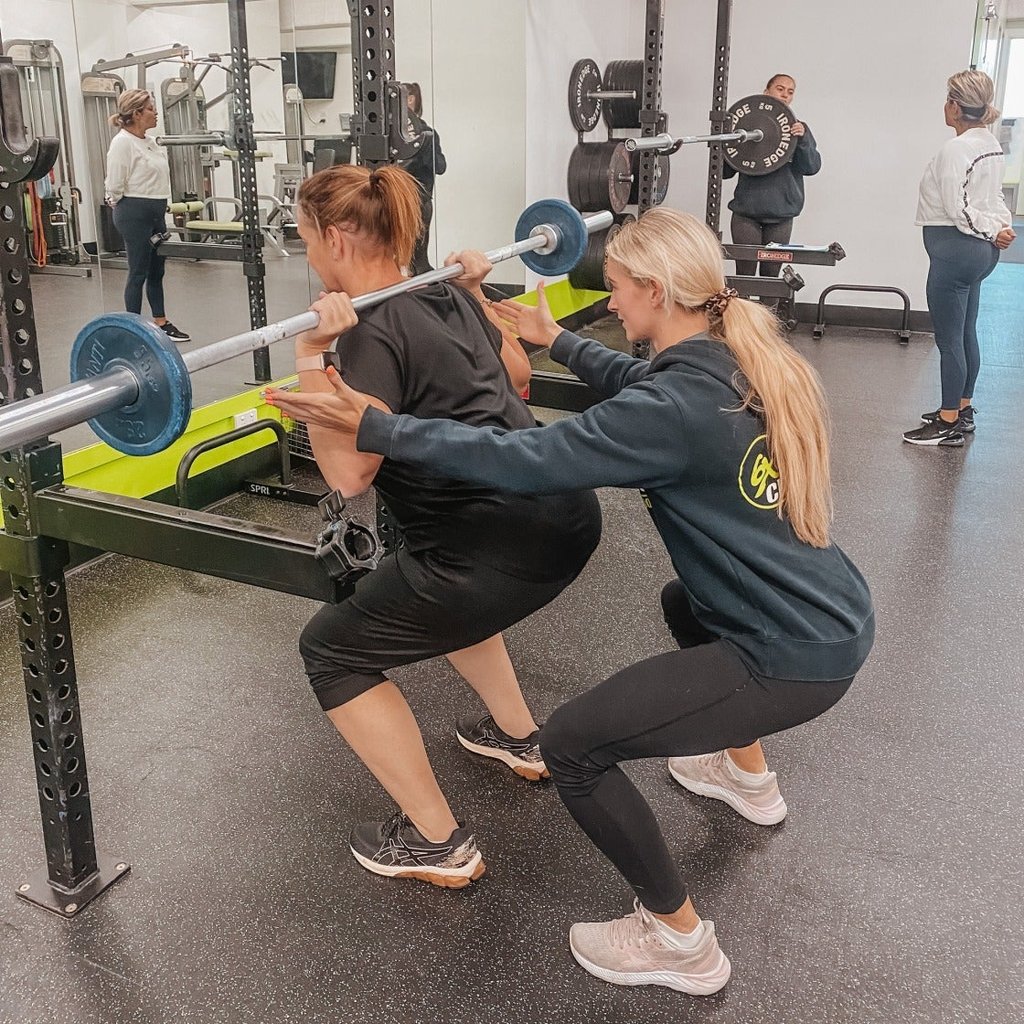
Resistance training is the lever that stops this. The same source notes that movement "also prevents muscle loss, which helps to keep your metabolic rate ticking over at a healthy level." The national guidance is 2.5 to 5 hours of moderate activity a week plus muscle-strengthening work on at least two days (Department of Health and Aged Care). What we tell people is simple: lift two to three times a week for the whole 14 weeks, eat enough protein, and your 10kg will be almost all fat. If you are past 40, the age-specific version of this plan is in how to lose weight after 40.
This is the part that surprises people, because the advice comes from the health department rather than a gym. Better Health Channel's own guidance says "Don't rely on the numbers on the scales," and points to waist circumference instead, under 94cm for men and under 80cm for women. We go a step further and measure body composition directly with an InBody scan at the start and then monthly, so we can see fat mass and skeletal muscle mass separately.
Why it matters for your timeline: a member who loses 8kg of fat and gains 2kg of muscle shows 6kg on the bathroom scale. By the scale they are behind schedule. By any measure that matters they are ahead of nearly everybody. Without a scan you cannot tell those two situations apart, and you will usually quit the better one.
It is 6 October. There are just over 11 weeks until Christmas Day, NSW school goes back on Tuesday 13 October for Term 4 (NSW Department of Education), and weekday routines settle for the first time since late September. That window is worth being specific about, because it is the most useful planning number in this article.
So the answer to "can I lose 10kg before Christmas" is: only if you start now and only at the top of the healthy range. If you start in November, you cannot, and any program that tells you otherwise is selling you the rebound. Healthdirect's framing is worth keeping in view here, that "losing as little as 5kg can make you feel better and reduce your risk of health problems" (Healthdirect). Five to eight kilos by Christmas is an excellent year, not a consolation prize.
If someone walks into our Maroubra studio wanting to lose 10kg, we do not sell them a six-week sprint, because 10kg is not a six-week job. We scan first so we know the real starting split of fat and muscle, set the deficit for roughly 0.6 to 0.8kg a week, build the week around two to three resistance sessions plus whatever walking fits their life, and then rescan monthly to confirm the weight leaving is fat. Here is how many sessions a week that takes.
The structural piece people miss is the length of the commitment. Our membership has a 12-week minimum for exactly this reason: a 10kg goal needs 14 weeks or so of coached consistency, and a four-week program that ends at a cliff edge will give you back every kilo. If you want the shorter version of this timeline, here is what a realistic 8-week transformation looks like, and if you want the mechanics of fat loss in full, start with our complete guide to fat loss in Sydney.
Four numbers, and only one of them is your body weight:
That is the whole dashboard. Add a monthly body-composition scan and you have everything you need to know whether 14 weeks will actually get you there, with enough warning to change course if it will not.
Questions
Fat Loss
Four weeks of effort and the scale has not budged. Most of the time that is not a broken metabolism, it is a measurement problem. Here is how we work out which one you have.
Fat Loss
What actually drives fat loss (energy balance, protein, resistance training), what to ignore, and how a Maroubra studio structures it.

Body Composition
What an InBody 570 scan measures, how accurate it really is versus DEXA, how to read your result, and where to book one in Maroubra, from a studio that scans members every 4 to 6 weeks.

Fat Loss
Fat loss after 40 is not harder because your metabolism broke. It is harder because of muscle, sleep, sitting and drinking. Here is how we fix all four.
This article is general information for healthy adults and is not medical, dietetic or physiotherapy advice. Speak with your GP or a qualified health professional before starting a new exercise, nutrition or recovery program, particularly if you have an existing injury or medical condition.
Your next step
The 28-Day Kickstart includes a consultation, an InBody scan and four weeks of coached training.