Nutrition
Nutrition for Fat Loss: A No-Fad Guide
The no-fad nutrition approach we use with members to drive fat loss, built around protein, portions and a structure that lasts past week three.
Nutrition
By Brad Ellison ·
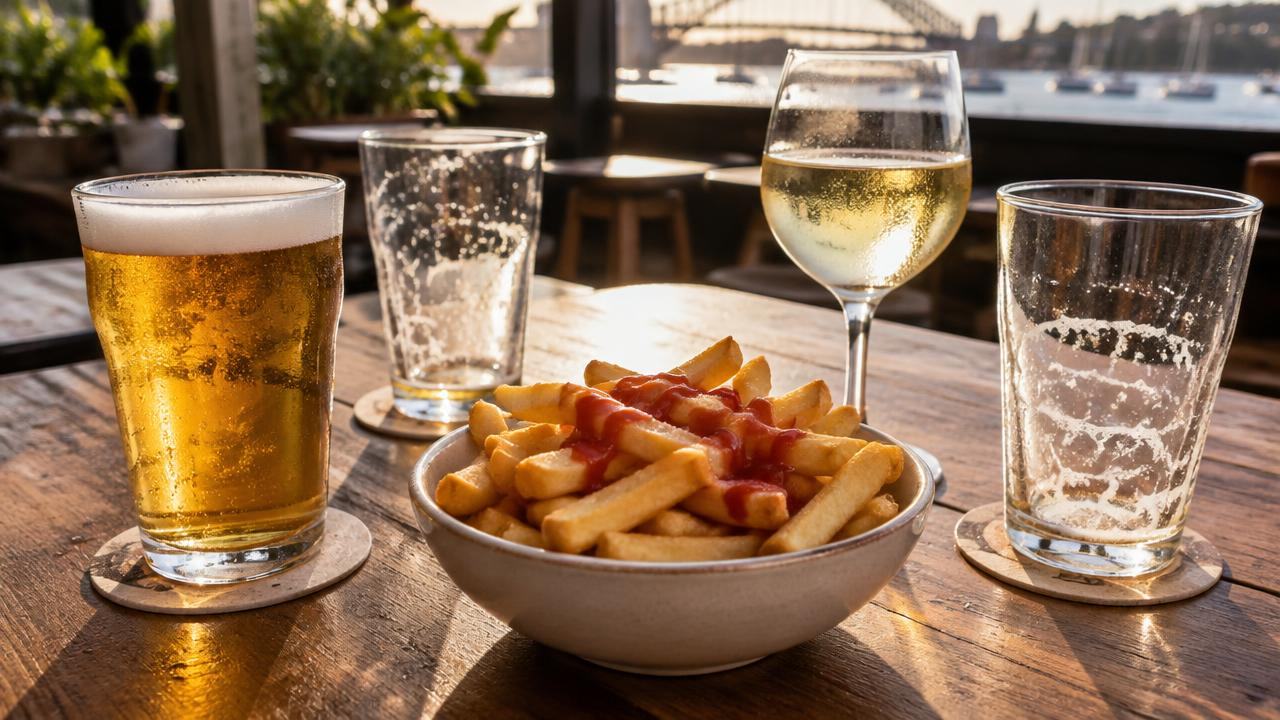
Alcohol has no special fat-making power, but it makes fat loss harder in four ways at once: it adds kilojoules you never notice, it pauses fat burning while your body clears it, it loosens what and how much you eat, and it takes the sleep that makes tomorrow's training and food choices possible. You can drink and still lose fat. Plenty of our members do. What you cannot do is drink the way you did before and expect the scan to move.
I have coached in Maroubra since 2011, and this is the single most common reason a client who is doing everything else right sits flat for a month. Not the training. Not the food on weekdays. Friday to Sunday.
Most people badly underestimate this, because alcohol never feels like food. Australian public-health figures put a 570ml pint of full-strength beer at about 880 kilojoules, a 150ml glass of wine at about 460, a 375ml can of pre-mixed spirits at about 990, and an espresso martini at about 710 (LiveLighter).
Run the arithmetic on a normal Saturday. A 425ml schooner works out around 650 kilojoules on those numbers, so five of them is roughly 3,250 kilojoules before a single chip. Against the 8,700 kilojoule average daily intake printed on Australian food labels, that is well over a third of a day. Against what someone actually eats while losing fat, it is closer to half. Then dinner happens.
This is the part that surprises people. Your body has nowhere to put alcohol, so it treats clearing it as the priority job and pushes other fuels to the back of the queue. As the Better Health Channel puts it plainly, alcohol stops your body from burning fat. It is not permanent and it is not magic, but for the hours your liver is working, fat oxidation drops while the kilojoules from the drinks and the food alongside them keep arriving.
The same page notes that where beer shows a link with body fat, it is more likely to be with abdominal fat than with overall weight. That matters, because the fat around your organs is the kind worth caring about. We cover why in our guide to visceral fat and how to reduce it.
Alcohol leads to greater hunger and less satiety, and it drives cravings for salty and greasy food (Better Health Channel). Every coach has watched this play out. Nobody orders a side of steamed broccoli at 10pm. What we see in food diaries is that the drinks themselves are rarely the biggest number; the late meal and the next day's recovery eating usually are.
So when a client tells me they had four drinks, I am not worried about the four drinks. I want to know what happened at 11pm and what happened at 11am on Sunday.
Alcohol will make you feel sleepy and may help you fall asleep, but it disrupts the night. The Sleep Health Foundation describes the second half of the night after drinking as more frequent awakenings, night sweats and trips to the bathroom, producing a fragmented, disrupted sleep episode. Even modest amounts increase snoring and the frequency and intensity of obstructive sleep apnoea. Their practical advice is to avoid alcohol for at least 3 to 4 hours before bed.
In my experience this is where the real damage sits. A poor night does not just make you tired; it makes you hungrier, less patient with food decisions, and far more likely to skip the session you had booked. One night out can quietly cost you two good days.
There is some evidence here, and it is worth stating carefully. In an Australian study published in PLOS ONE, trained men who drank after a hard training session showed lower rates of muscle protein synthesis, down 24 percent when alcohol was taken with protein and 37 percent when taken with carbohydrate, compared with protein alone (Parr et al., 2014).
Read the dose before you panic. Participants drank 1.5 grams per kilogram of body mass, which the authors put at about 12 standard drinks. That is a genuinely big night, not two glasses of wine with dinner. Treat this as emerging evidence about heavy drinking around training rather than proof that a beer ruins your week. The practical rule we use is simple: do not put your biggest drinking night straight after your hardest session. Protecting lean mass is the whole game after 40, which is why we bang on about strength training after 40.
The national guidance for healthy adults is no more than 10 standard drinks a week and no more than 4 on any one day (NHMRC, 2020). A standard drink in Australia is 10 grams of alcohol, which is 100ml of wine, 285ml of full-strength beer or 30ml of spirits (Eat For Health).
Notice the wine number. A restaurant pours around 150ml, so what you call two glasses is closer to three standard drinks. A schooner is 1.6 standard drinks, not one. Most people I sit down with are drinking about 40 percent more than they think, and that gap alone explains a stalled month.
We do not ask people to give up alcohol. We ask them to spend it on purpose. These are the six rules that survive contact with real life:
None of this works without a baseline. If you cannot see what is happening to your body fat and lean mass month to month, you will blame the wrong thing. We measure every member with an InBody scan so the conversation is about data rather than guesswork.
It is late September in Sydney. The NSW school holidays run from Monday 28 September to Friday 9 October, Term 4 starts on Tuesday 13 October (NSW Department of Education), and daylight saving begins on Sunday 4 October. From there the calendar fills up: end-of-season functions, work Christmas parties, long weekends and a coastline that does not let you hide.
There are about thirteen weeks between this week and Christmas Day. At a reasonable and maintainable rate of about half a kilo to one kilo a week (Better Health Channel), thirteen weeks is 6 to 13 kilograms of room. Every member I have watched arrive in January happy started this part of the year with a drinking plan, not a resolution. The ones who start in late November are just negotiating with arithmetic.
This is not a case for never drinking again, and going teetotal is not a requirement for losing 5 kilograms. Alcohol is a budget line, like anything else you eat. Spend it where it buys you something: a birthday, a long lunch, a Sunday at the beach with friends. Stop spending it on Tuesday out of habit. If you want the rest of the picture, our no-fad nutrition guide for fat loss covers the protein, portion and structure side that makes the drinking question much smaller.
If you want this handled properly before the silly season rather than after it, that is exactly what our 28-Day Kickstart is built for: a real baseline scan, coaching, and a nutrition plan that includes the nights out instead of pretending they will not happen.
Questions
Nutrition
The no-fad nutrition approach we use with members to drive fat loss, built around protein, portions and a structure that lasts past week three.
Fat Loss
What actually drives fat loss (energy balance, protein, resistance training), what to ignore, and how a Maroubra studio structures it.
Fat Loss
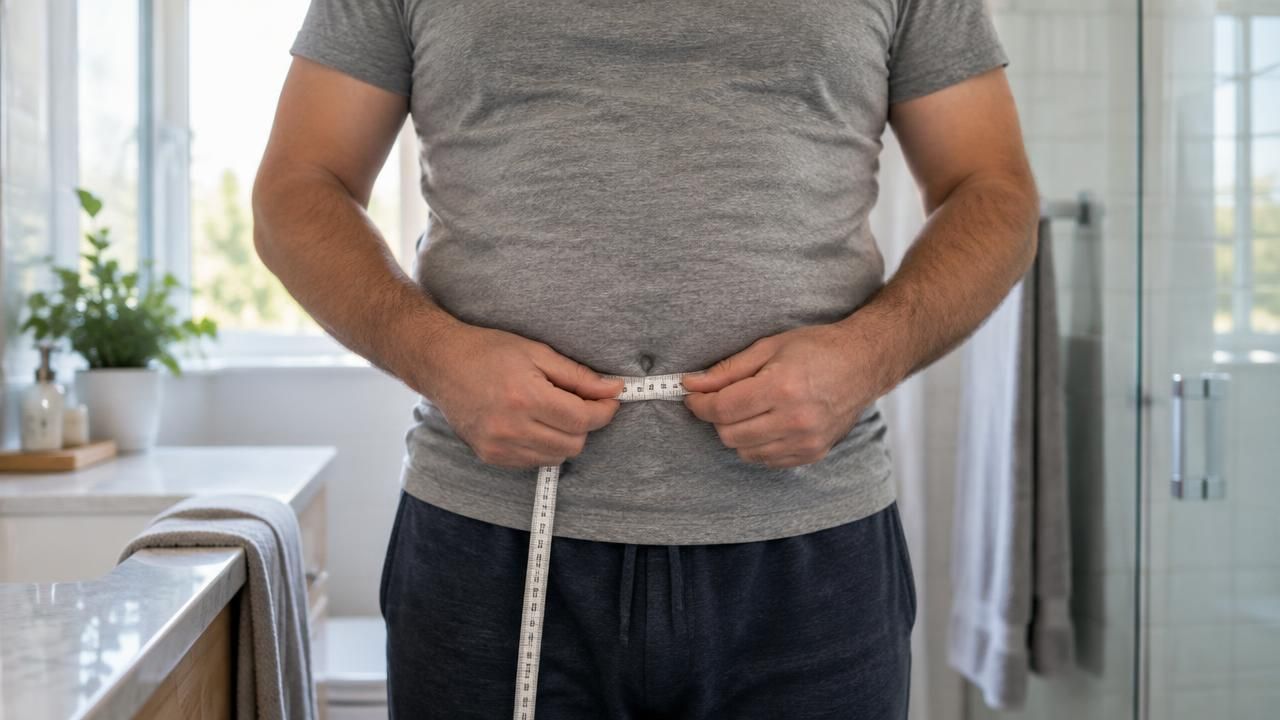
Why belly fat is stubborn, why spot-reduction is a myth, and the approach that actually works.

Body Composition
What visceral fat is, why it matters more than the fat you can see, and how to reduce it.
This article is general information for healthy adults and is not medical, dietetic or physiotherapy advice. Speak with your GP or a qualified health professional before starting a new exercise, nutrition or recovery program, particularly if you have an existing injury or medical condition.
Your next step
The 28-Day Kickstart includes a consultation, an InBody scan and four weeks of coached training.