
Training
Strength Training After 40: Why It Matters More, Not Less
Why resistance training becomes the highest-value habit after 40, and how to start safely.
Fat Loss
By Brad Ellison ·

Losing weight after 40 is not hard because your metabolism collapsed. It is hard because you carry less muscle, get less sleep, sit more and drink more than you did at 25. All four of those are fixable. Lift weights at least twice a week, eat enough protein, cut the liquid calories, walk more, and aim for 0.5 to 1kg a week. That is the entire answer. The rest of this is how we actually get men to do it, and the traps I have watched them fall into since 2011.
Every week a bloke sits across from me at the studio and says some version of "I don't know what happened, it just crept on." He thinks he is unusual. He is the majority. The Australian Institute of Health and Welfare reports that 72 percent of males aged 18 and over are living with overweight or obesity, compared with 62 percent of females. Break it down by age and it gets starker: in the ABS National Health Survey, 74.8 percent of men aged 35 to 44 and 77.9 percent of men aged 45 to 54 were overweight or obese.
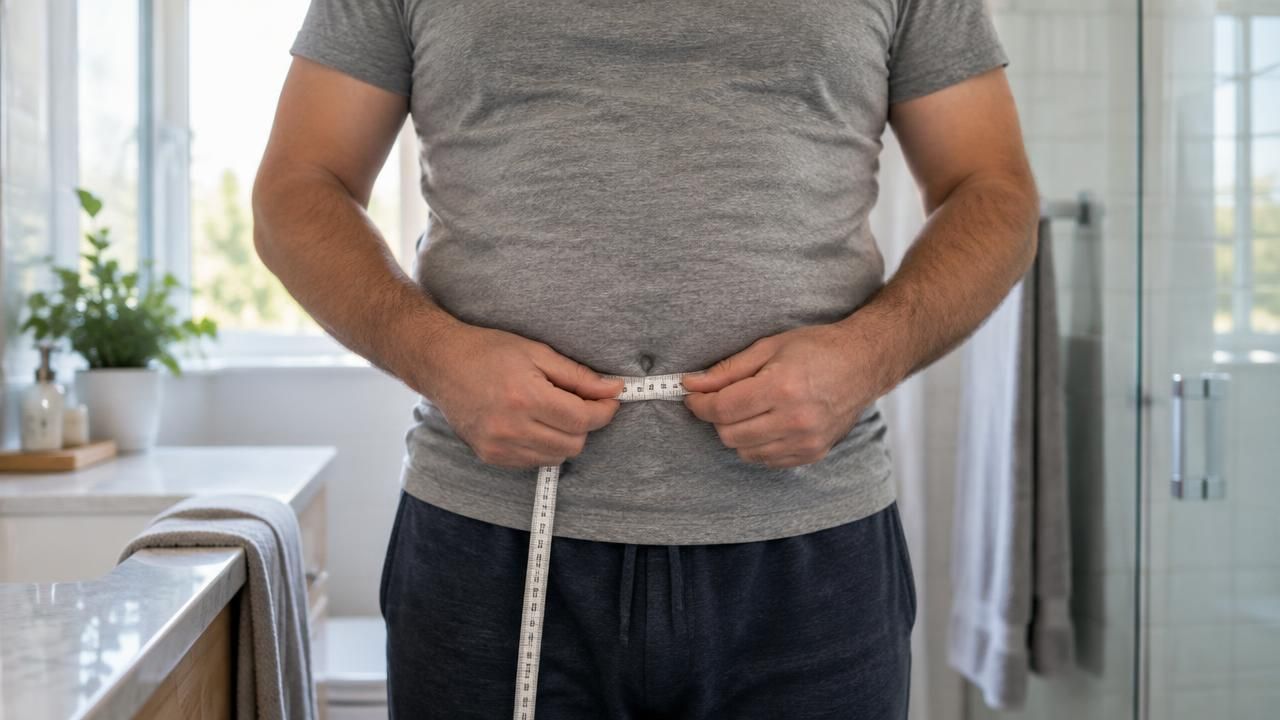
The waist numbers matter more than the scale ones. In the same ABS data, 70.2 percent of men aged 45 to 54 had a waist measurement that put them at increased risk of chronic disease. The Better Health Channel puts a healthy waist for men at under 94cm and tells you plainly not to rely on the numbers on the scales. If you own one measuring tape and one set of scales, the tape is the more useful tool.
None of that is meant to scare you. It is meant to take the shame out of it. You are not weak, you are average, and average is a bad place to be at 45.
There are four real reasons, and a metabolism that mysteriously died is not one of them.
Notice that three of the four are lifestyle drift, not biology. That is good news. Drift can be reversed.
If you only change one thing, change this. The Australian physical activity guidelines for adults aged 18 to 64 say to include muscle-strengthening activities on at least 2 days each week, on top of 2.5 to 5 hours of moderate activity or 1.25 to 2.5 hours of vigorous activity. Most men over 40 I meet are doing some version of the cardio half and none of the strength half.
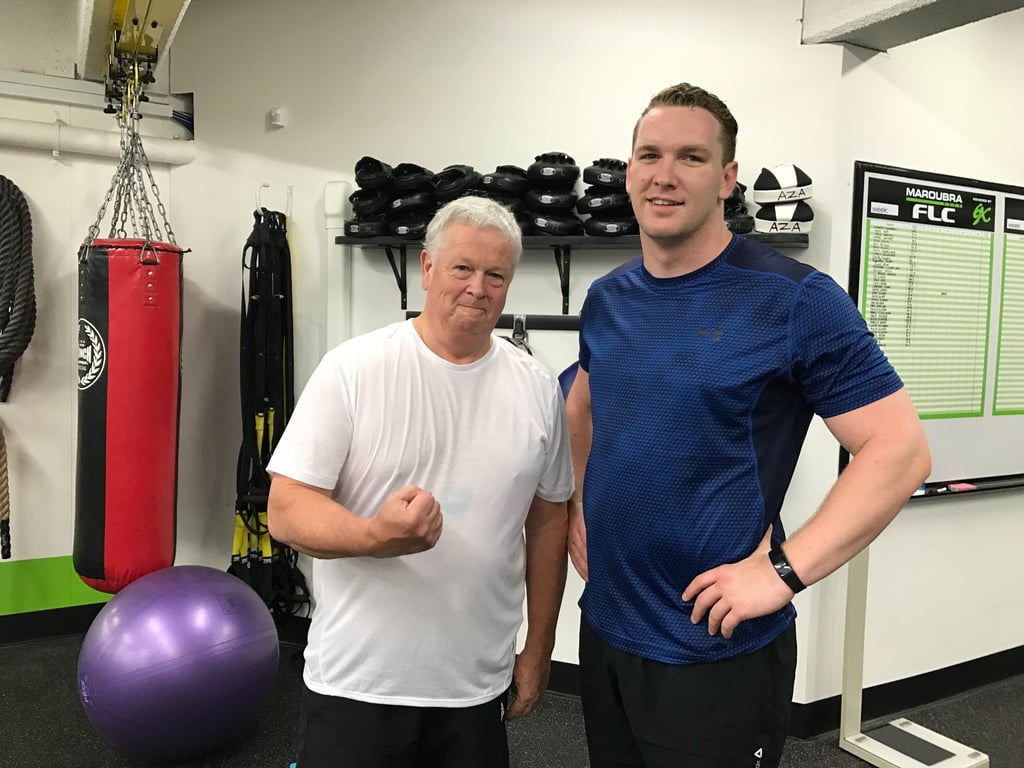
Resistance training is what tells your body to hold onto muscle while you are eating less. Skip it and you will lose weight, but a chunk of what you lose is the tissue you most need to keep. The Better Health Channel says it directly: when you lose weight too quickly, you lose fat and muscle. Two full-body sessions a week is the floor, three is better, and the lifts that matter are the boring ones: squat, hinge, push, pull, carry. More detail on how to set that up in our guide to strength training after 40.
Protein is the lever most men under-use. It keeps you fuller on fewer calories and it gives your body the raw material to keep muscle while you drop fat. The best available evidence on how much you need comes from a 2018 systematic review and meta-analysis in the British Journal of Sports Medicine (Morton and colleagues, 49 studies, 1,863 participants), which found that intakes beyond about 1.62g of protein per kg of bodyweight per day produced no further training-related gains in lean mass. That plateau had a wide confidence interval, so treat it as a sensible ceiling rather than a precise law.
In practice, for a man who is training and trying to lose fat, we aim for roughly 1.6 to 2.0g per kg of bodyweight. For a 95kg bloke that is about 150 to 190g a day. The way to hit it is not a shaker full of powder, it is 30 to 40g of protein at each meal: eggs or Greek yoghurt at breakfast instead of toast and a banana, a decent serve of meat or fish at lunch and dinner. Most men I work out protein targets with are starting from about 80g a day and are amazed how much less hungry they feel at 160g.
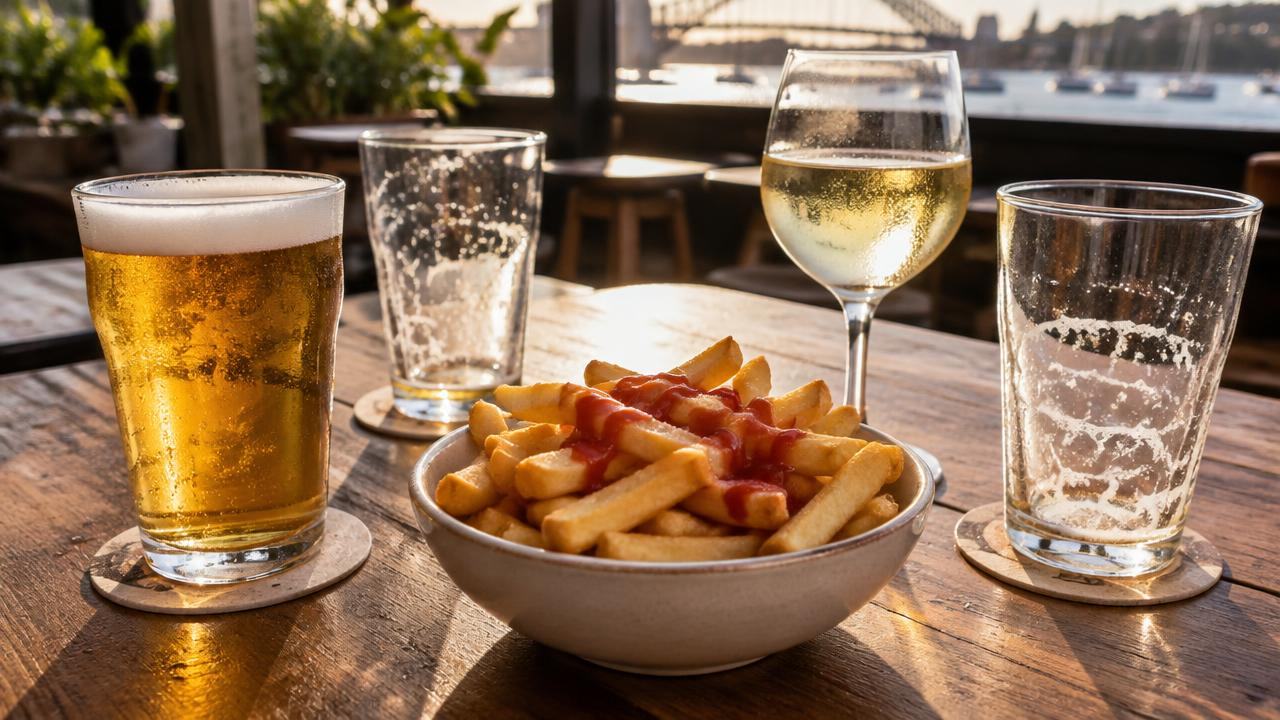
I am not going to tell you to quit. I will tell you that a Friday and Saturday of solid drinking can erase the deficit you built across five days, twice over, and that it wrecks the sleep that makes the next week's training work. The men who get the fastest results are almost always the ones who move from drinking five nights a week to drinking two, rather than the ones who go dry for a month and then come back harder.
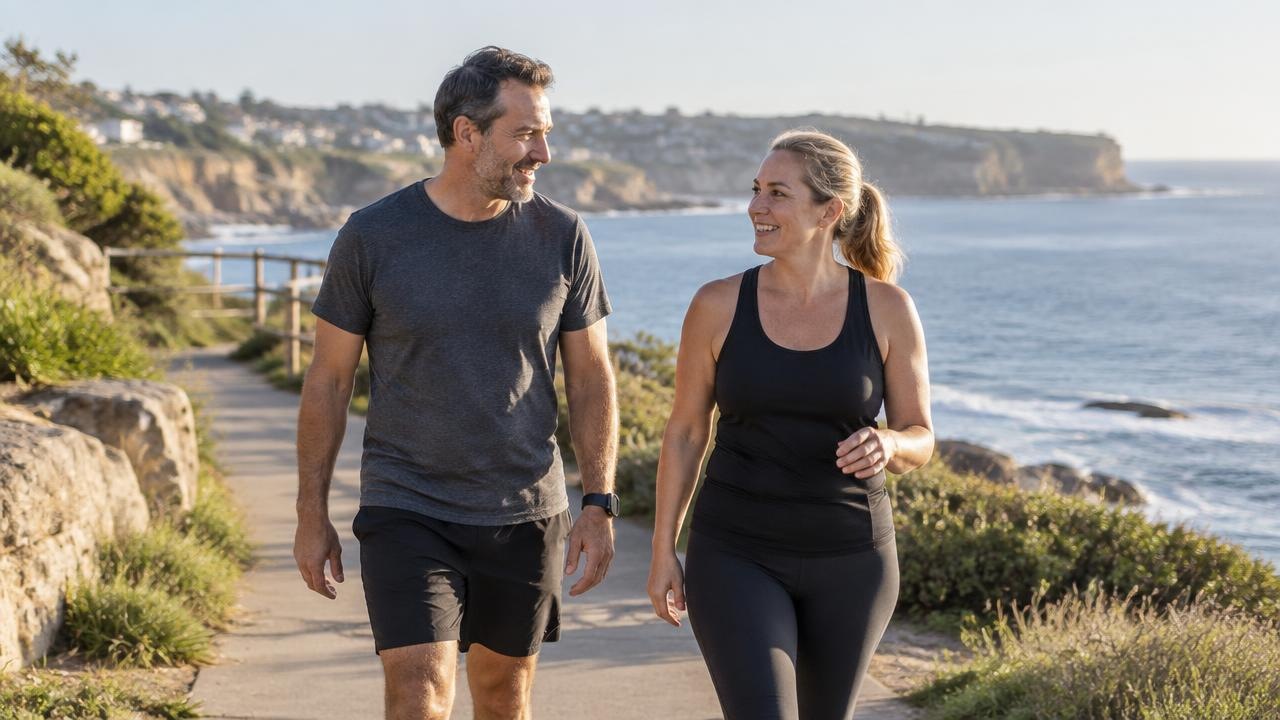
Training sessions are three or four hours of your week. The other 165 hours matter more than people want to hear. Getting from 4,000 steps a day to 9,000 is a bigger change in weekly energy output than adding a fourth gym session, and it does not cost you any recovery. Living in the Eastern Suburbs you have the coastal walk, Maroubra beach and Centennial Park on your doorstep, so there is not much excuse. With daylight saving in since early October, there is enough light for a walk after dinner again.
Seven hours, phone out of the bedroom, and no alcohol inside three hours of bed. It is the least glamorous item on this list and it is usually the one that makes the rest work, because a man who has slept makes better food decisions at 4pm than a man who has not.
Targets stop this from being vibes.
If you want 10kg gone, the realistic window is 12 to 20 weeks at that rate, which we work through properly in how long it takes to lose 10kg. Starting now, 10kg by late February is comfortably achievable. Starting in January, it is not.
This is close to what the men who get results at 6X actually do, and it is far less than most people imagine.
That is about four hours a week. Men tell me they do not have time for fat loss, and what they usually mean is that they do not have time for the twelve-hour-a-week version they saw online. Nobody is asking for that.
One practical note: the Better Health Channel advises checking with your doctor before starting physical activity if you are overweight, over 40, or have not exercised regularly for a long time. If that is you, get the tick and then get started.
It is mid-October. There are just under 10 weeks until Christmas, Term 4 has just started, and Sydney's summer begins in about six weeks. Every man who starts in the first week of January is starting from a worse place than he is in right now, after six weeks of Christmas parties, Melbourne Cup lunches and a fortnight off. Starting now means you arrive at Christmas lighter and use January to keep going instead of to dig out.
In my experience the men who change their body shape are not the most motivated ones. They are the ones who picked an unglamorous plan in October and were still doing it in March.
We are a boutique studio on Malabar Road in Maroubra and this is most of what we do: men and women in their thirties, forties and fifties who want 5kg or more gone and want somebody to hold them to it. Structured programs, a monthly body composition scan so you can see whether you are losing fat or muscle, and a coach who notices when you miss a week. If you want the shortest version of a start, our 28-Day Kickstart gets you training, measured and eating properly inside a month, with a guarantee attached.
Questions
Training
Why resistance training becomes the highest-value habit after 40, and how to start safely.
Fat Loss
Why belly fat is stubborn, why spot-reduction is a myth, and the approach that actually works.
Nutrition
What alcohol actually does to fat loss, the kilojoule numbers behind a big weekend, and the drinking rules we give members heading into Christmas.
Fat Loss
Between 10 and 20 weeks at a sustainable rate, and about 14 if you want to keep it off. Here is what sets your timeline.
This article is general information for healthy adults and is not medical, dietetic or physiotherapy advice. Speak with your GP or a qualified health professional before starting a new exercise, nutrition or recovery program, particularly if you have an existing injury or medical condition.
Your next step
The 28-Day Kickstart includes a consultation, an InBody scan and four weeks of coached training.