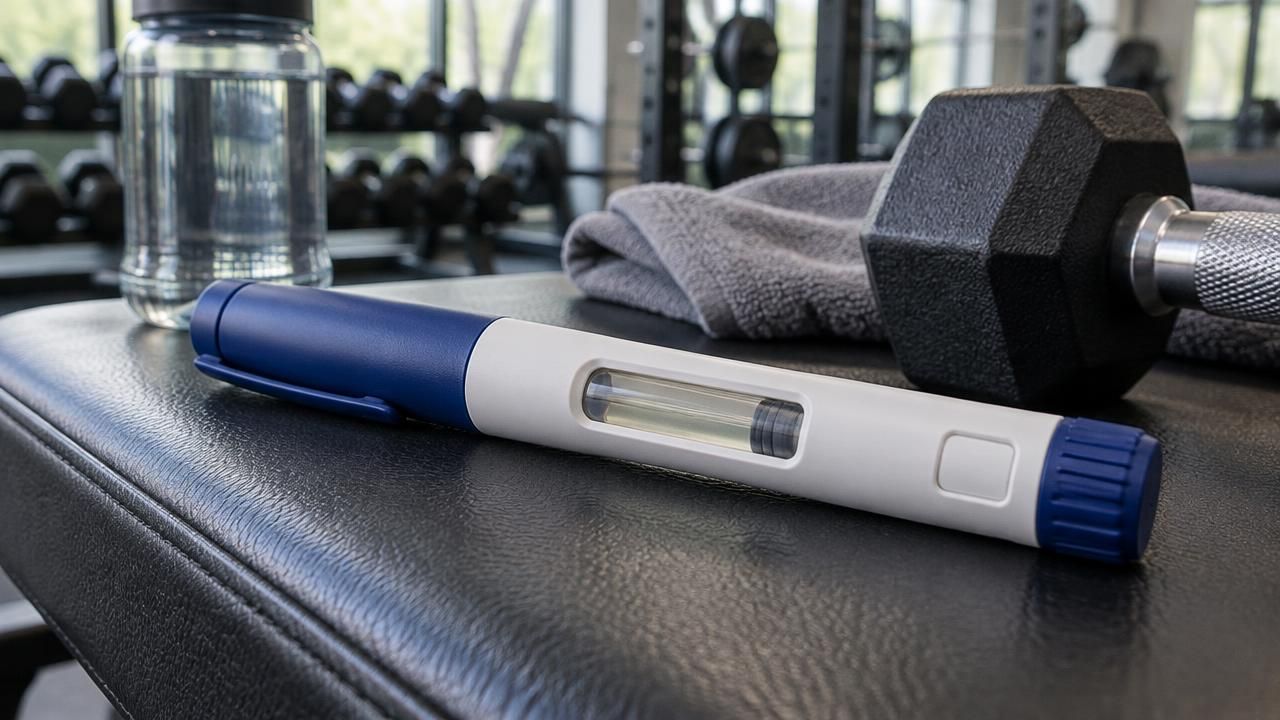
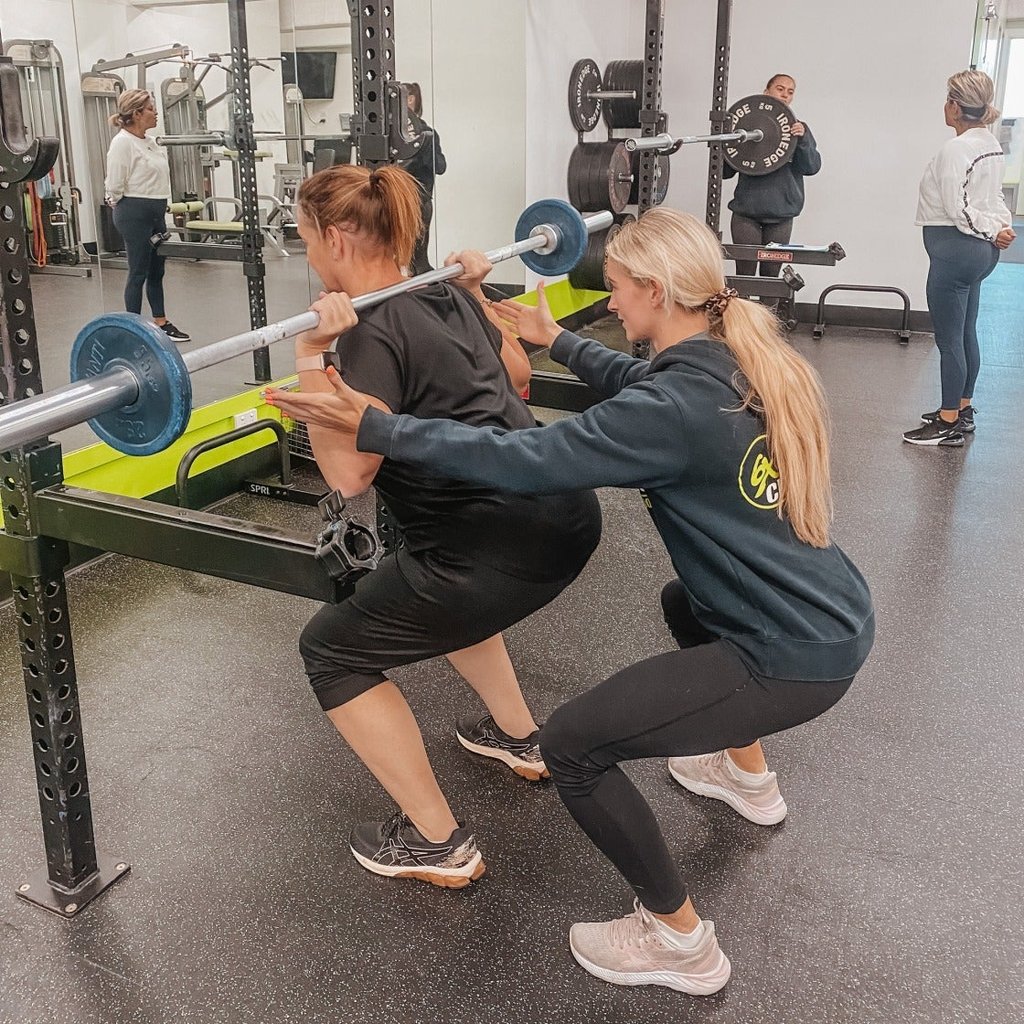
If you are taking a weight-loss injection like Ozempic, Wegovy or Mounjaro, here is the short version. The medication will almost certainly move the number on the scale. But studies of people using these drugs find that roughly 20 to 30 percent of the weight they lose is muscle, not fat, and more if they do nothing to protect it. Most of that is preventable. Resistance training two to three times a week, enough protein, and a sensible rate of loss keep most of that muscle on your body. Here is what we tell members who train with us in Maroubra: why it happens, and exactly what to do about it.
First, why these medications cost you muscle
Any time you lose weight in a calorie deficit, whether through diet, surgery or medication, some of it comes from lean tissue, not just fat. That is normal physiology. What is different about GLP-1 medications (semaglutide in Ozempic and Wegovy, tirzepatide in Mounjaro) is how powerfully they suppress appetite. People eat dramatically less, lose weight quickly, and often fall into two traps at once. They are not eating enough protein to defend muscle, and they are not giving their muscles any reason to stay. Muscle is expensive for the body to maintain, so if you are not using it and not feeding it, it is the first thing to go.
The numbers back this up. Reviews of GLP-1 users report that a meaningful share of total weight lost, commonly around 20 to 30 percent, is lean mass. Tirzepatide (Mounjaro) tends to produce larger total weight loss than semaglutide, around 20 percent of body weight over 72 weeks versus roughly 14 percent, which means that without a plan, more muscle can go along with the fat.
Why losing muscle is a problem worth taking seriously
Losing weight fast feels like winning. Losing muscle while you do it quietly works against you:
- Your metabolism slows. Muscle is metabolically active tissue. Less of it means you burn fewer calories at rest, which makes the weight easier to regain later.
- You get weaker and less capable. Strength, balance and everyday function all depend on muscle, and that matters more with every decade after 40.
- The rebound comes back as fat. If weight returns after you stop the medication, which it often does without a lifestyle change, it comes back as fat, not muscle. Repeat that cycle and your body composition ends up worse than where you started: lighter on the scale, softer underneath. Coaches call it "skinny fat".
- For women over 50 especially, muscle and the strength training that builds it also protect bone density, a bigger long-term health issue than a few kilos.
The three things that protect your muscle
You do not need anything exotic. Three levers do almost all the work.
1. Lift weights two to three times a week
This is the non-negotiable. Resistance training is the strongest signal you can send your body to hold onto muscle while you are in a deficit. A meta-analysis of dieting older adults found that resistance training prevented the large majority of the muscle loss that dieting alone caused. You do not need to train like a bodybuilder. Two to three structured sessions a week covering the main movements (squat, hinge, push, pull, carry) is enough to change the outcome. It is the same foundation we cover in our guide to strength training after 40.
2. Eat more protein than feels natural
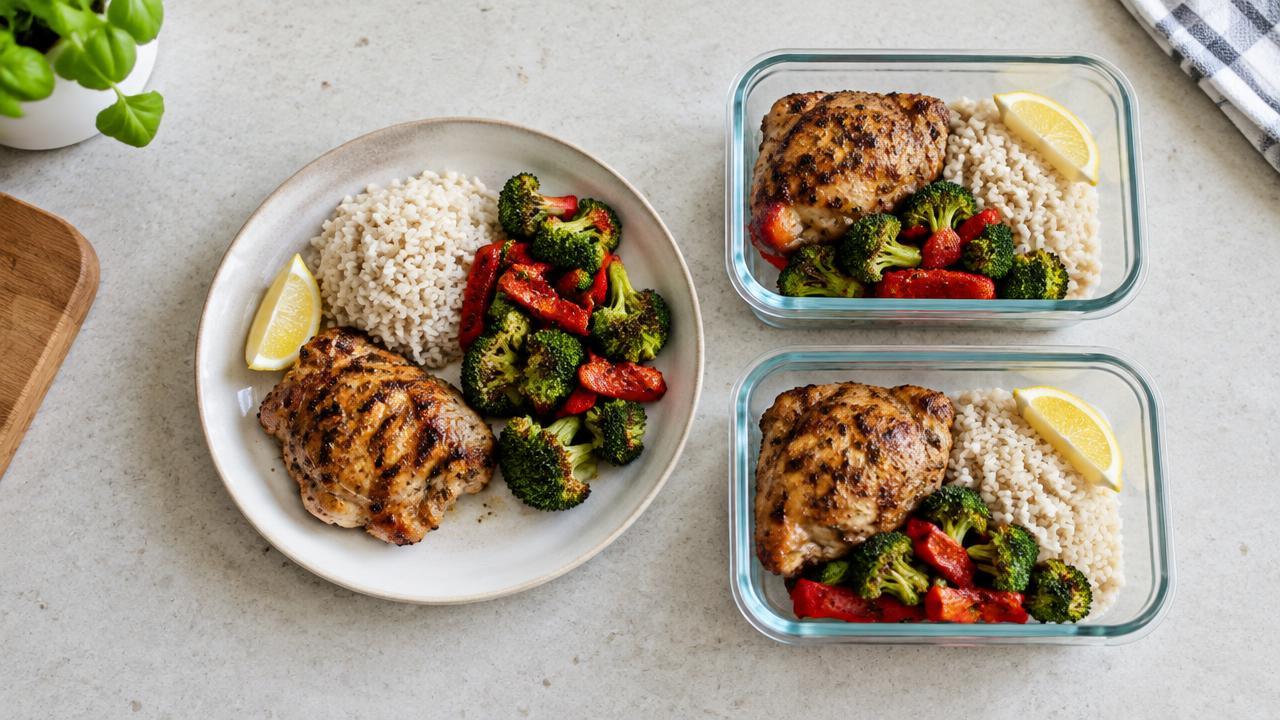
Appetite suppression is the whole point of the medication, which makes hitting your protein genuinely hard, because you are simply not hungry. But protein is what resistance training uses to defend and rebuild muscle. Research on weight loss points to roughly 1.6 to 2.4 grams of protein per kilogram of body weight per day to protect lean mass. In practice that means making protein the first thing you eat at every meal, even when the portion is small: eggs, Greek yoghurt, chicken, fish, lean meat, tofu, or a protein shake when a proper meal is not going to happen. Our no-fad nutrition guide has the practical version.
3. Do not lose it too fast
A brutal deficit strips muscle faster. The evidence suggests keeping the daily deficit moderate, in the order of 500 calories rather than as little as you can possibly eat, preserves more lean mass. Faster is not better here. Steady loss with your strength holding is the real win.
How to tell if you are losing muscle, not just weight
This is the question we get most, and the frustrating answer is that you cannot reliably tell by feel. Muscle loss is quiet. But there are signals worth watching, and if two or three of them show up together it is worth acting on.
- Your lifts are going backwards. The clearest early sign. If the weight you could handle six weeks ago now feels heavy, you are losing tissue, not just fat.
- The scale is dropping faster than about one percent of your body weight a week. Fast loss takes more lean mass with it.
- You are losing weight but your shape is not changing much. Fat loss changes how clothes fit. Losing muscle and fat together often does not.
- You feel flat, cold or weak through the day. Common when intake has dropped hard and protein has dropped with it.
- Your grip and balance feel different. Both track whole-body strength closely.
- You are not doing any resistance training. If that is true, you can assume you are losing muscle. The only question is how much.
The reliable answer is measurement. A body composition scan splits the number on the scale into fat mass and lean mass, so instead of guessing from how you feel, you get two numbers you can act on. That is the difference between finding out at week four and finding out a year later. If your loss has flattened out, read why the scale stops moving.
How we approach this at 6X
This is where measurement matters, because the scale actively hides the problem. Two people can both lose 8kg. One lost 7kg of fat and half a kilo of muscle. The other lost 5kg of fat and 3kg of muscle. The scale says they did equally well. Their bodies, their metabolisms and their next twelve months say otherwise.
We use an InBody 570 scan to separate the two. For members using or starting a weight-loss medication, we take a baseline scan first, then re-scan every four to six weeks, which turns an invisible risk into a number you can act on. If lean mass starts slipping, we adjust training and protein before it becomes a problem. You can read more about what an InBody scan actually measures. Around that, our coaching is built for exactly this job. Max8 coached group sessions and one-on-one personal training provide the resistance-training stimulus, and practical nutrition support helps you hit protein when your appetite is working against you. The medication handles appetite. We make sure what you lose is fat.
We are in early Spring in Sydney with about fourteen weeks to Christmas, and this is the time of year these conversations spike. The members who start protecting muscle in September are the ones still holding their strength in January, whether they are still on the medication or not.
Common mistakes we see
- Only doing cardio and walking. Both are great for health and for the deficit, but neither tells your body to keep muscle. Lifting does.
- Ignoring protein because you are "barely eating". This is the most common and most costly one. Low appetite is exactly when protein has to be deliberate.
- Chasing the scale. Weighing daily and celebrating every drop trains you to value total weight, which is the wrong target. Watch fat mass and lean mass, not just the number.
- Waiting until after the medication to "get into training". The muscle is lost during the weight loss. The time to protect it is now, not later.
What to do if you have already lost muscle
Plenty of people come to us partway through treatment, or after finishing it, having realised the weight came off but the strength went with it. It is recoverable. Muscle you have built before comes back faster than muscle you have never had, and the plan is not complicated.
- Start resistance training now, not after the medication. Two to three sessions a week covering squat, hinge, push, pull and carry. This is the whole game.
- Get protein up first, before anything else changes. If appetite is still suppressed, liquid protein and protein-first meals do more than any supplement.
- Stop chasing further scale drops for a while. If lean mass is already low, eating at maintenance while you train is the faster route back to the body you wanted.
- Get a baseline scan now. You cannot manage what you have not measured, and you need a starting point to know whether the plan is working.
- Expect it to take longer than the loss did. Rebuilding is slower than losing. Twelve weeks of consistent training is a realistic first checkpoint, which is exactly why we ask for a minimum of twelve weeks.
Strength training also protects bone density, which matters more with each decade and matters most for women after menopause. We cover that in detail in our guide to strength training for women over 50. If you have never lifted before and the idea is daunting, here is what actually happens in a first session.
A note on safety
This is coaching guidance, not medical advice. Weight-loss medications are prescription drugs with real benefits and real side effects, and the decision to start, adjust or stop one sits between you and your GP or prescriber. Healthdirect's guidance on weight-loss medicine is a sensible starting point. In Australia, medications such as Mounjaro and Wegovy are TGA-approved for chronic weight management, while Ozempic is approved and PBS-subsidised for type 2 diabetes. On the training side, Australia's physical activity advice recommends adults do muscle-strengthening activity on at least two days a week, which is the floor we work from. What we do is complement your medical care by making sure the weight you lose is the weight you actually want to lose. Always talk to your doctor about training and nutrition if you have a medical condition. If you are on a prescription and wondering who should be running the training and food side, read who you actually need: a coach, a trainer or a dietitian.